
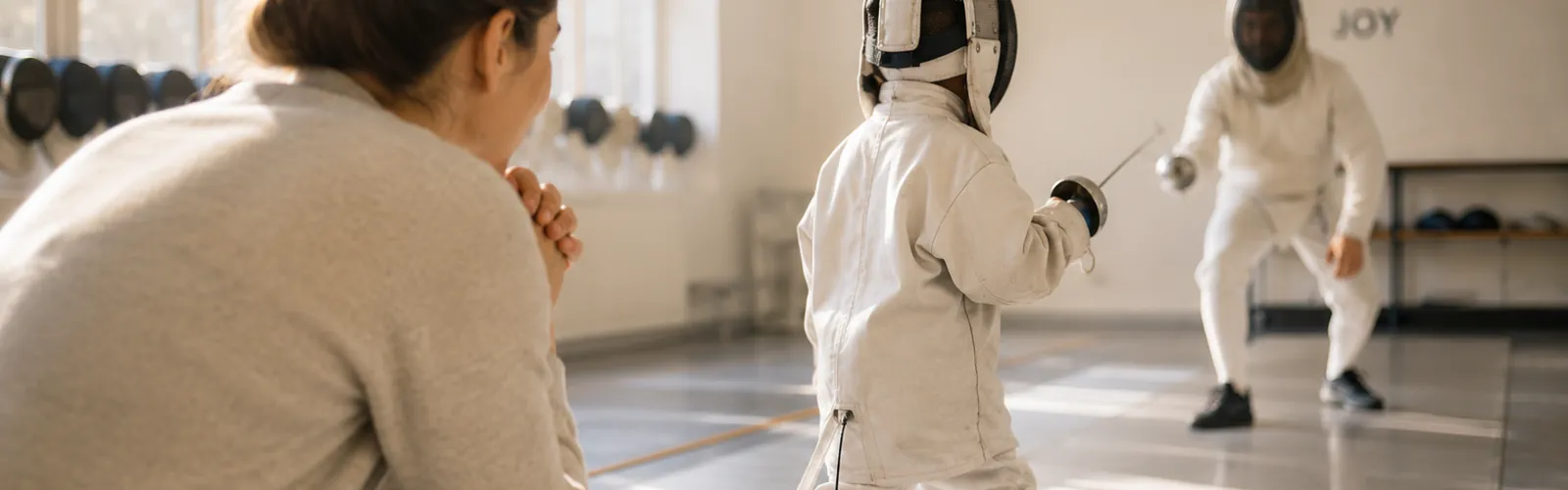
Getting your kid into fencing: a parent's guide
Short answer: yes, and it is easier to start than most parents expect
Fencing is one of the best sports for kids. It rewards brains as much as speed, it is remarkably safe, and most clubs will have a child fencing in their very first class. You do not need to buy anything to start, and you do not need any background in the sport yourself. Find a club with a beginner class, book a trial, and let the coaches take it from there.
What age can a kid start fencing?
Most clubs take children from about 7 to 9 years old for regular classes, and some run little-musketeer style sessions with foam or plastic swords from age 5 or 6. Before 7 it is more about coordination games than real fencing. There is no upper limit either. Plenty of kids start at 11, 12 or in their teens and do very well, because fencing is a late-specialisation sport where a strong start in the early teens is completely normal.
How many lessons a week should my child do?
Start with one class a week and let them fall in love with it before adding more. That is enough to learn the basics and see if it clicks. If they are keen after a couple of months, two sessions a week is the sweet spot for a recreational-to-competitive kid: one group class plus, ideally, the occasional private lesson with a coach. Only children training toward serious competition need three or more, and that comes later, driven by the fencer, not the parent.
Is fencing safe for children?
Very. Despite the swords, fencing has a lower injury rate than most youth sports, including soccer and basketball. The blades are blunt and flexible, the full kit (mask, jacket, glove) is built to take a hit, and clubs are strict about gear and supervision. The most common issues are ordinary sports strains, not sword injuries.
What does it cost to get started?
Less than most parents fear at the start. A beginner class or a short learn-to-fence course usually includes loaner gear, so your only cost for the first month or two is the class fee. Once your child commits, you gradually buy their own kit (mask, jacket, glove, weapon), which you can do piece by piece. Our cost guide and cost calculator break down real numbers, and our equipment guides cover what to buy first.
Foil, epee or sabre for a beginner?
Almost every club starts young kids on foil, because it teaches the cleanest fundamentals and right of way. Do not overthink the weapon choice at the start. Your child will try it, and many switch later. If you want the full rundown, take our which weapon quiz.
What to do first, this week
- Use the club map and tap Near me to find clubs within a sensible drive.
- Look for a beginner class or intro course, not just open fencing, and check the class times fit your week.
- Call or email and ask three things: what age do you start, do you lend gear to beginners, and can we watch or try a class.
- Book one trial. Bring long socks, athletic shoes and a water bottle. The club supplies the rest.
FAQ
My kid might be into fencing. What do I actually need to know? Find a club with a beginner class, book a trial (gear is usually loaned), start with one session a week, and let their interest set the pace. You need nothing beyond athletic clothes to begin.
How many lessons a week should I get my son or daughter into? One to start; two once they are hooked (a group class plus an occasional private lesson). Save three or more for when they are genuinely chasing competition.
Is my child too young or too old? Regular classes usually start around age 7, and there is no too old. The early teens are a perfectly normal, even ideal, time to begin.
New to all of this? Start with our getting started guide, then find a club near you.
← All guides · Find a club · Club map · FAQ