
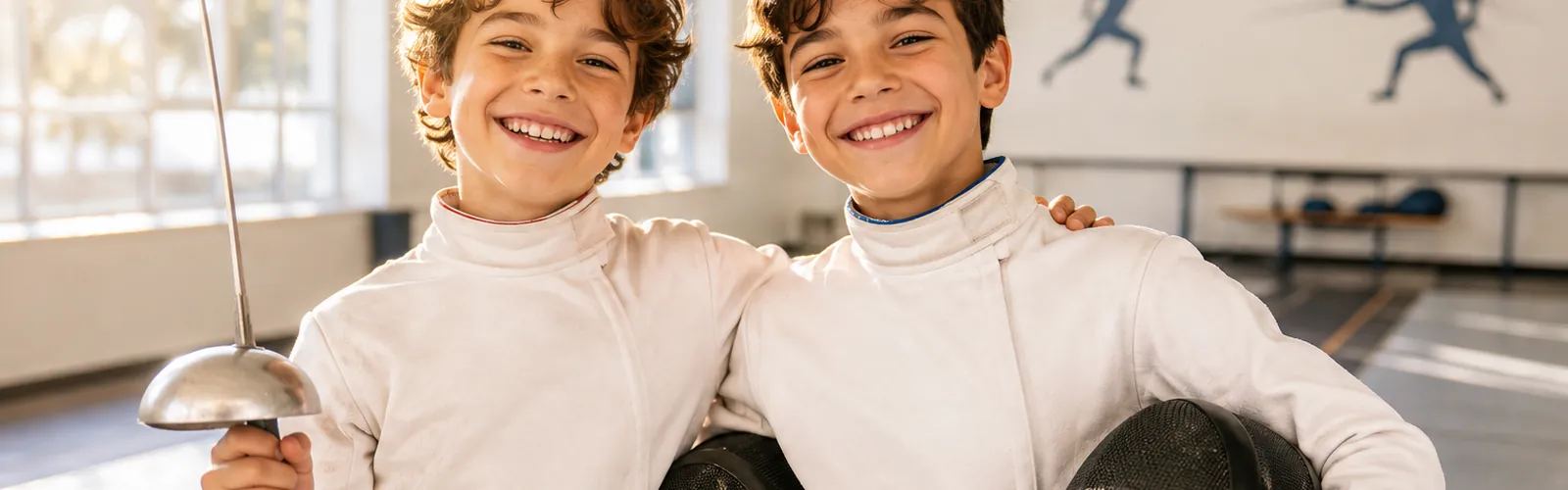
Benefits of fencing for kids: why it's worth starting
If you're asking why should my child start fencing?, here's the honest case. Fencing is one of the rare sports that trains the body and the brain at the same time, and it gives kids things that carry well beyond the strip: focus, composure, and the habit of thinking fast under pressure. Here's what your child actually gets.
It costs less than most parents expect
Fencing has a reputation for being pricey, but getting started is not. Most clubs lend beginners a mask, jacket, and weapon for the first months, so you can try it before buying a thing. A recreational season runs about the same as any other youth sport. See the honest numbers in our cost breakdown, and the smart ways families save in the discount gear guide.
A genuine full-body workout
A typical practice is nonstop lunges, footwork, and fast reactions. Depending on intensity, an hour of fencing burns roughly 400 to 700 calories, and it builds balance, coordination, and cardiovascular fitness along the way. It's the kind of exercise that lowers blood pressure and keeps a young heart healthy, and kids barely notice they're working because they're too busy competing.
One of the safer sports
Fencing looks dangerous and is not. The blades are blunt and flexible, and every piece of gear is rated to withstand far more force than a fencer can deliver. Injury rates sit well below contact and ball sports. More on this in the FAQ.
It trains the brain, not just the body
Fencing is often called physical chess, and the nickname is earned. Every exchange is a puzzle solved in a fraction of a second: read the opponent, pick the tactic, commit. Coaches and researchers point to gains in focus, memory, and quick decision-making, and to the abstract thinking that comes from combining speed, distance, timing, and strength on the fly. Those are the exact skills that help in a classroom.
Character your kid keeps off the strip
- Self-discipline and respect. You salute your opponent before and after every bout. Good habits get drilled in from day one.
- Handling winning and losing. Fencing is one on one, so there's nowhere to hide. Kids learn to win gracefully and lose without falling apart.
- Channeling competitiveness. It gives energetic, intense kids a place to pour their drive, and it lowers stress and frustration in the process.
Individual and team at the same time
Your child competes as an individual, which builds real self-reliance, but clubs also fence team events where you win and lose together. Kids get both: personal accountability and the belonging of a squad.
An Olympic sport with staying power
Fencing is one of only a handful of sports contested at every modern Olympic Games since 1896. It's a real pathway, not a passing trend, and a fencer can start young and keep going for life. Curious how far it goes? See the road to the Olympics and college fencing.
What age can they start?
Most clubs start kids around 7 or 8, and some run little-fencer classes as young as 5 or 6 using sized-down gear. There's no upper limit either, plenty of families take it up together. The best first step is a beginner camp or an intro class where gear is provided.
Ready to see if it clicks? Find a club near you and watch a class, or start with our family start guide.
← All guides · Find a club · Club map · FAQ