
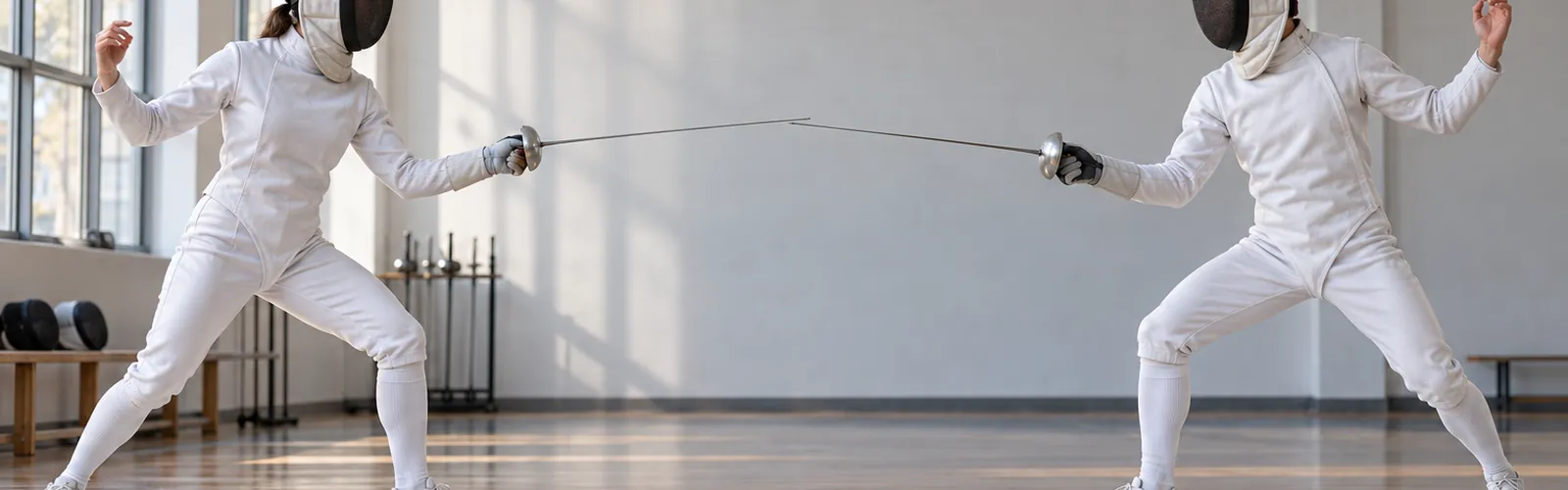
The left-handed advantage in fencing
Do lefties really have an edge?
Short answer: yes, a little. Watch any big fencing tournament and you'll notice something odd. A much larger share of top fencers are left-handed than you'd expect from the general population, where roughly one in ten people are lefties. On the elite podium, that ratio jumps way up. So there's something real going on here.
Why the edge exists
It mostly comes down to practice, or the lack of it. Most fencers are right-handed, so most bouts a right-hander fights are against other right-handers. They get very comfortable with that mirror. Then a lefty shows up, and suddenly the angles, the blade lines, and the target all sit on the wrong side. The righty rarely trains against that.
Meanwhile the lefty fights right-handers constantly, so facing a righty feels totally normal. That's the whole trick: it's a familiarity gap, not magic.
Does it last at the top?
It seems to. You might expect elite fencers, who drill against lefties on purpose, to wipe the edge out, but ranking studies find the opposite: left-handers make up an even bigger share of the highest world rankings in foil and épée than of fencers lower down. Lefties still have to be good, though. The edge is a small head start in every bout, not a substitute for skill, and a right-hander who trains against lefties regularly takes much of the surprise away.
- It's a familiarity edge, not raw talent.
- Regular practice against lefties shrinks it for any one fencer.
- It shows up across foil, epee, and sabre.
Should this change anything?
No. Don't steer a kid toward one hand for a sport advantage. Let them fence with whatever hand feels natural, and enjoy the quirk for what it is. Find a spot to start at our clubs directory and let your fencer discover which side they land on.
← All guides · Find a club · Club map · FAQ