
How to start a fencing club
Starting a fencing club is more doable than most people think. You do not need a huge budget or a dedicated building to begin. Plenty of clubs started in a church hall, a school gym or a rec center with a handful of loaner sets and one coach. Here is the honest path from idea to first class, with the official USA Fencing resources that make it easier.
- Club Incubator Program. USA Fencing walks you through setting up the legal entity, branding and finding a facility, with expert guidance the whole way. Their line is that after about three months in the program you are running your own classes.
- 2-4-1 Fencing. A simple, low-cost way for schools and community organizations to introduce fencing without building a full club first. A good test of local demand before you commit.
1. Check there is demand
The clubs that last solve a real local gap. Look at what already exists near you on our club directory and map. A town with no club within a 30 minute drive, a school with interested kids, or a rec center looking for new programs are all good signs. Run a one-off beginner night or a 2-4-1 session first and see who shows up.
2. Pick your model
How you start shapes everything else:
- Community club. The classic model, open to all ages, usually renting time in a gym or leasing its own space.
- School team. If your goal is a high school program, we have a full guide on how to start a high school fencing team.
- College club. A student-run club at a university. USA Fencing has a dedicated college-club track.
3. Space and flooring
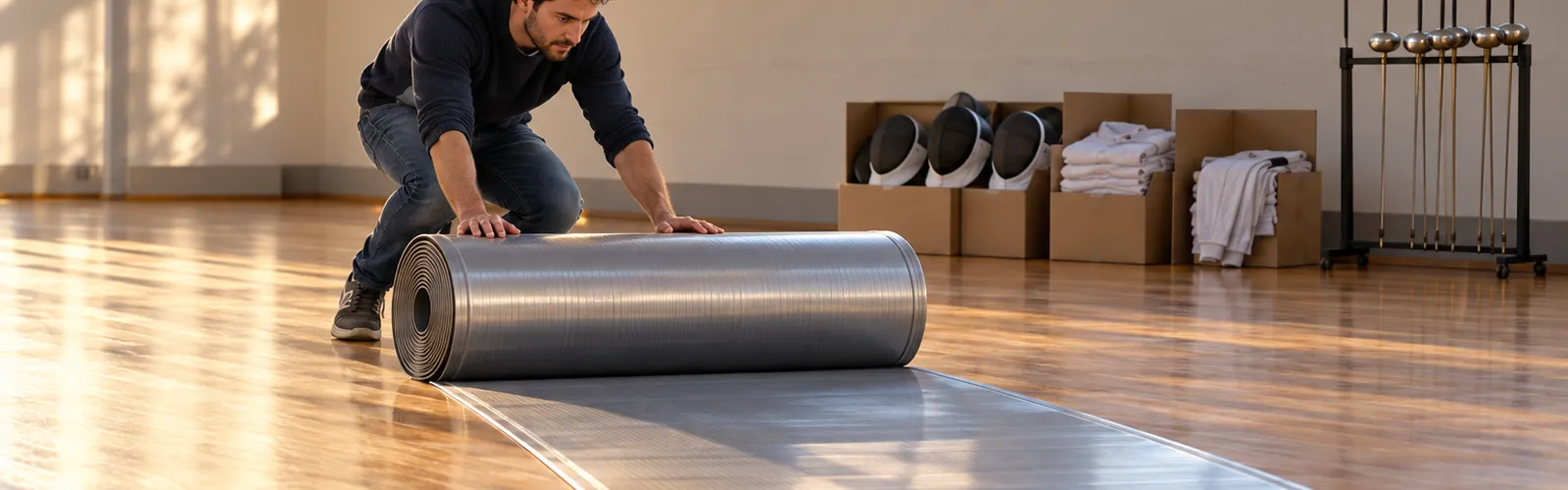
A fencing strip (piste) is about 14 meters long, roughly 46 feet, and 1.5 to 2 meters wide, with a little runoff at each end. Add a couple of meters of ceiling clearance for raised blades and you have your minimum footprint. To start, you need one clear strip length of flat floor. Many new clubs simply tape strip lines on a gym floor. Dedicated metal strips and rubber piste come later when you have steady numbers. Prioritize a flat, non-slip surface and enough length over anything fancy.
4. Equipment: start small and dry
You do not need electric scoring to begin. Most clubs open with dry (non-electric) foils and a set of loaner gear so new students try before they buy:
- A handful of loaner masks, jackets, gloves and dry weapons in common sizes (see our beginner equipment guide for what each piece is and costs).
- Strip tape or a couple of strips to define the fencing area.
- Electric scoring gear (reels, scoring boxes, body cords, lames) is a later upgrade once you are running bouts and small competitions. Buy it in stages.
Buying in bulk for a club? Ask the specialist vendors about club and coach discounts, and see where to find discount gear.
5. Coaching and safety
You need at least one person who can teach beginners safely. That can be an experienced fencer to start, but plan toward proper coaching credentials as you grow. Safety is not optional: USA Fencing membership comes with member requirements around safe-sport training and screening for people working with athletes, so check the current requirements for coaches and club staff on USA Fencing's site before you run classes. Teach mask-always, salute-and- control habits from day one. Our guide on whether fencing is safe covers the culture that keeps it that way.
6. Register the club with USA Fencing
To hold sanctioned activity and put your members on the national system, you enroll the club with USA Fencing. New club membership runs about $199 per season for the first three seasons, and you complete the Club Enrollment Form for new members. This is also what connects your fencers to ratings and tournaments down the road. Confirm the current fee and forms on the official start-a-club page.
7. Insurance, legal and money
Set up a simple legal entity (the Incubator Program helps here), get liability insurance, and read any commercial lease carefully for use and flooring clauses. Keep the money model plain at first: a per-class or monthly fee that covers your rent and gear, loaner equipment included so cost is not a barrier for beginners. Point families who need help toward our funding and scholarships guide.
8. Get your first students
Run an open house (USA Fencing has a ready-made brochure), partner with a school or rec center through 2-4-1, and get listed everywhere families look. When you are ready, add your club to FencingFAQ for free, no website needed, so people searching for fencing near you can find your class times and contact info.
Official resources: USA Fencing start-a-club (Incubator, 2-4-1, video series and templates). Then build the local network: find nearby clubs and coaches, and list your new club.
← All guides · Find a club · Club map · FAQ