
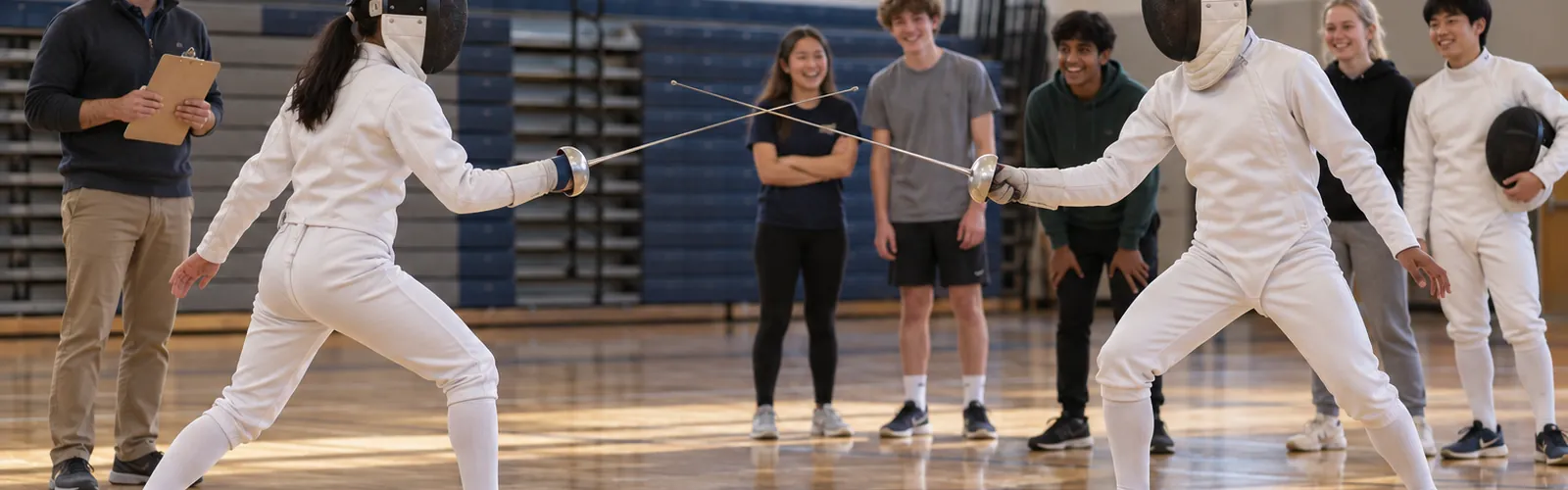
How to start a high school fencing team
Plenty of high school fencing programs were started by one determined parent, coach or student. If that is you, here is the whole path, drawn from USA Fencing's official High School Start-Up Manual, in plain steps. It takes patience, but it is very doable.
1. Decide what you are building: club or varsity
Answer three questions first: are you forming a club team or a school-sanctioned varsity team, will you join an existing league or start one, and will you need to pitch a school board? A useful truth up front: start as a club team. A well-run club proves demand and makes a future varsity bid far easier.
2. Gauge interest
Before anything else, prove there is demand. Survey students, run a demo during PE classes, and hold an after-school info session. Look for a few experienced fencers in the building who can act as ambassadors and pull in their friends. Numbers on paper are what convince a school and future sponsors.
3. Build a budget (including the hidden costs)
Money is the quickest route to a yes, because schools rarely have start-up funds for a new sport. Draft a real budget and plan for more than one season. Do not forget the hidden costs: facility rental, transportation to meets, coach and official pay, practice equipment, tools and repairs, and a little for promotion. Share the numbers openly with the athletic department and parents. Costs can be lowered with grants and used gear (more below).
4. Recruit parents and volunteers
The programs that last have a support team, not a hero. Find two or three parent leaders early, give them real jobs, and form a booster club to handle fundraising, exposure and support. Anyone in your area who has fenced is a bonus, bring them in.
5. Secure facility space
- On campus: a gym, multipurpose room or unused classroom works. Coordinate with administration to reserve it, and lock it when gear is stored there.
- Off campus: a community center, rec facility or local fencing club can host practice. Sort out transportation and check that students are insured off site.
- Storage: secure lockers or racks so gear is not lost or damaged during the school day.
6. Find coaches and officials
Recruit committed coaches and connect them to training. Coaching credentials vary by state, so check your state high school athletics association (and NFHS Learn); the US Fencing Coaches Association can help train coaches. Great sources: alumni who fenced, coaches at local USA Fencing clubs, and local referees, who know the rules cold.
7. Insurance and registering the team
Insurance is usually a prerequisite for using a facility. Coverage through the school is the easiest route; if that is not available, USA Fencing membership carries liability and accident coverage for coaches, officials and players. Once you are up, register your program with USA Fencing so you can manage a roster, validate membership, and get a Certificate of Liability.
8. Recruit fencers
Introduce the sport in PE classes, host a try-it recruitment event, use social media, and build a pipeline from local middle schools. A one or two week summer camp is a great feeder. Lean on the reasons families love fencing when you pitch it: see the benefits and the reassuring safety data to win over parents and administrators.
9. Get equipment affordably
Ask retailers about overstock and team sponsorships, buy in bulk for discounts, and apply for a USA Fencing Fencing the Gap grant. If you use donated or used gear, inspect it carefully, damaged or ill-fitting gear is a safety and insurance problem. More ways to save in our discount gear guide.
10. Find schools to compete against and fundraise
USA Fencing lists high schools with programs and staff can connect you with local competition. Keep team dues as low as you can, since high dues shut people out, and cover the rest with fundraisers that double as team-building.
Ready to build the network around your new team? Find local clubs and coaches, read how to start a community fencing club, or see more guides for new fencing families.
← All guides · Find a club · Club map · FAQ